A Ped’s Perspective: Understanding Hand, Foot & Mouth Disease
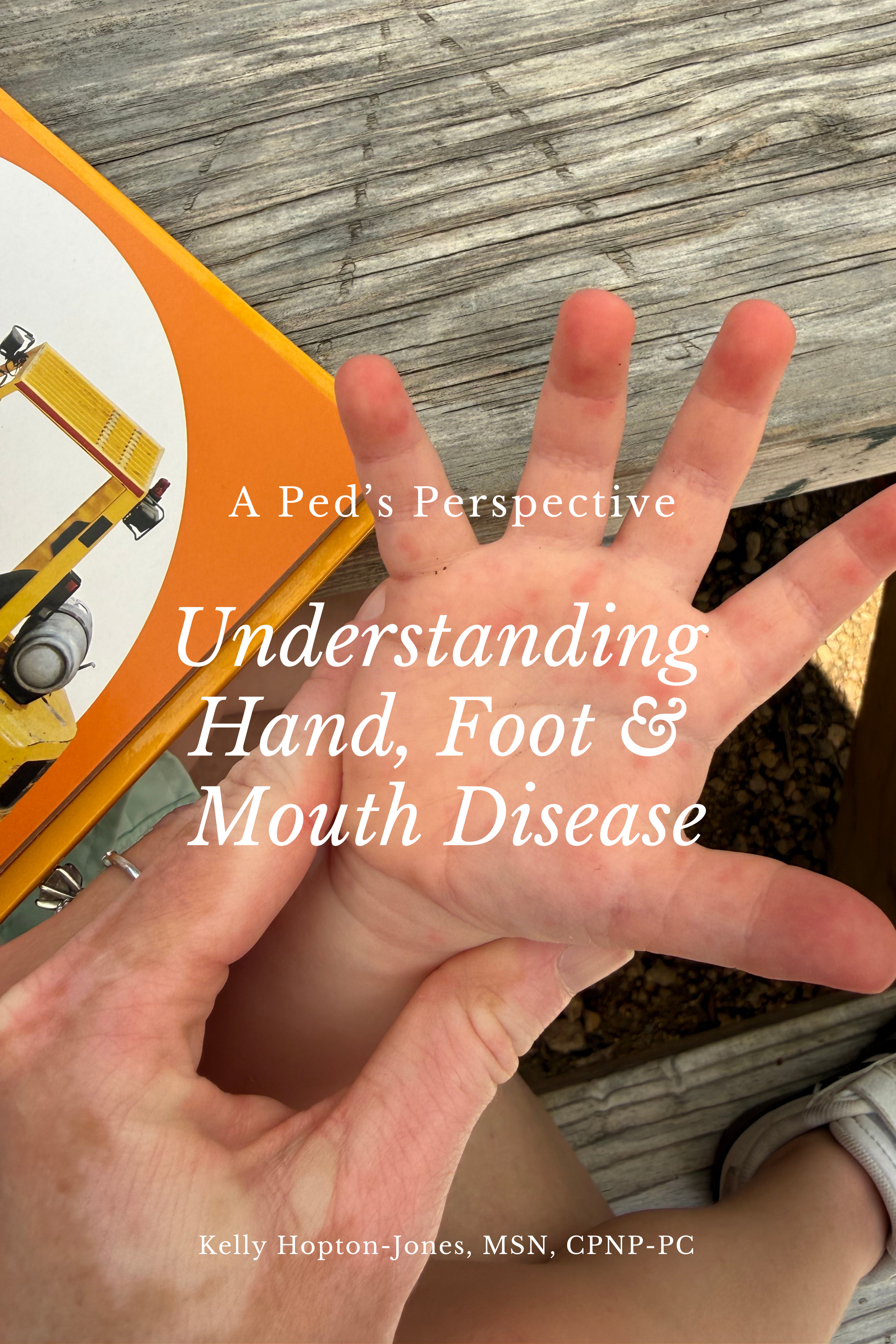
Hand, Foot & Mouth (HFM), also known as coxsackie virus, is a very common viral illness I see in pediatrics. It is especially common in children under the age of five and tends to circulate during the summer and early fall.
While the rash can look alarming, the good news is that HFM is usually a self-limiting illness that improves with supportive care at home. Understanding what is normal, what to expect, and when to seek medical care can make this illness feel much less overwhelming, and this article will give you that clarity.
What is Hand, Foot and Mouth?
HFM is not caused by just one virus. There are multiple viral strains that cause the illness, and the strains circulating in the community change over time. This is why symptoms can vary so much from one child to the next and from one season to the next. Some children have only a few lesions and mild symptoms, while others develop a more extensive rash and painful sores inside the mouth.
Because immunity is strain specific, having HFM once does not protect against every future infection. It is possible to get HFM more than once, and one episode may look very different from the next.
Adults can get HFM as well, although it is less common and symptoms are often more mild than they are in children.
Beyond the Diagnosis
One of the realities of pediatrics is that illnesses often evolve over time.
A child may come into the office during the first day or two of a fever with only a sore throat and a few scattered red spots. At that point, it may not be possible to confidently diagnose Hand, Foot & Mouth disease yet because the rash has not developed its characteristic pattern.
There are many viruses that can cause rashes in childhood. In pediatrics, we often use the term viral exanthem, which simply means a rash caused by a virus. Early in an illness, many viral rashes look very similar, and it is not uncommon for them to evolve over several days before becoming more recognizable.
This is why it is not always possible to identify the exact virus during an initial evaluation, especially if your child is brought in shortly after symptoms begin. Early in an illness, there simply may not be enough information yet. From a pediatric provider’s perspective, we are more interested in determining how your child looks, whether there are signs of a more serious illness, and whether they can be safely cared for at home while the illness continues to declare itself.
As HFM progresses, the diagnosis often becomes much clearer than it was at the beginning of the illness.
What are the symptoms?
Like many viral illnesses, HFM often starts with non specific symptoms. Your child may have a fever, sore throat, runny nose, fatigue, decreased appetite, or some combination of these symptoms.
Then, usually within a day or two, the rash begins to appear.
It often starts as small red spots that gradually develop into tiny blisters. The rash is most commonly found on the palms of the hands, soles of the feet, around the mouth, and sometimes inside the mouth. While this characteristic distribution is often what makes HFM easier to recognize, not every child develops lesions in all of these locations. The rash can also appear on the arms, legs, torso, or buttocks. In fact, lesions in the diaper area are so common that pediatric providers often joke it should really be called “Hand, Foot, Mouth, and Bottom Disease.”
One thing pediatric providers also pay attention to when evaluating a rash is whether it blanches. This simply means the rash temporarily turns white when you press on it. The rash associated with HFM is typically blanching. A rash that does not blanch can sometimes be a sign of a more serious illness and should be evaluated promptly.
How is HFM treated?
Because HFM is caused by a virus, treatment is supportive. There is no medication that makes the illness go away faster. Instead, treatment focuses on keeping your child comfortable while their immune system fights the infection.
Hydration is the priority.Painful mouth sores can make children refuse to drink, especially toddlers. Offering frequent small sips is often more successful than expecting them to drink a full cup at once. It can also help to offer something cold that feels better on a sore mouth.
A decreased appetite for a few days is expected; staying hydrated is much more important. However, if your child is eating very little or refusing food altogether, plain water alone is not ideal. Under normal circumstances, water is an excellent choice for hydration, but children who are taking in very little nutrition are at risk of electrolyte imbalance. Offering milk, smoothies, broth, or, in some cases, an appropriate electrolyte drink can help replace both fluids and electrolytes until they are eating again.
Beyond the Diagnosis: Electrolytes
Before reaching for whatever you have at home, it’s important to know that not all electrolyte drinks are designed for the same purpose.
Some are designed for everyday hydration, while others are specifically formulated to replace the fluids and electrolytes with dehydration.
Electrolyte packets have become very popular over the last few years, so it’s common for parents to ask if they can just use what they already have at home. If your child likes drinking them, it’s a great choice for hydration with illness.
Gatorade is another common choice, but while it does contain electrolytes like sodium and potassium, it is not my first choice because it is also high in sugar and contains artificial flavors and dyes. That said, I would much rather a child drink Gatorade than refuse fluids altogether.
If your child is showing signs of dehydration, this is where the distinction becomes important. Everyday hydration electrolyte drinks are not the same as an oral rehydration solution. Products like Pedialyte and Kinderlyte are specifically formulated to replace the fluids and electrolytes with dehydration. If I’m recommending an oral rehydration solution, I personally prefer Kinderlyte because it avoids artificial dyes while still being formulated for that purpose.
Hydration and electrolyte replacement are topics all on their own. I may have to dive much deeper into this in a future A Ped’s Perspective.
Pain management
Managing discomfort can make a big difference, especially if it is preventing your child from drinking. Acetaminophen or ibuprofen are good choices based on your child’s age, but always follow your healthcare provider’s weight based recommendations for dosing.
Mouth sores can be especially painful and are often the reason children refuse to drink. Depending on your child’s age and ability to safely swish and spit, your healthcare provider may recommend a compounded medication often referred to as “magic mouthwash” to help with discomfort. While it is not appropriate for every child, it can be a helpful option to discuss if mouth pain is worsening and especially if it is making hydration difficult.
With time, supportive care, and plenty of rest, most children begin feeling much better within seven to ten days.
Is HFM contagious?Like many childhood viruses, HFM spreads easily between children. It is spread through saliva, respiratory secretions, stool, and the fluid inside the blisters.
Children are generally most contagious during the first week of illness. Even after they begin feeling better, the virus can continue to be shed in the stool for several weeks.
While it is impossible to eliminate every exposure, good handwashing remains one of the best ways to reduce the spread. This is especially important after diaper changes, using the bathroom, and before preparing or eating food.
If you’ve followed me for a while, you know I am a big believer in handwashing over routine hand sanitizer use. Hand sanitizer can have its place, but especially with illnesses like HFM, soap and water is the better choice.
Something You Might NoticeAs the rash heals, some children develop peeling of the skin on their hands or feet. Several weeks later, certain strains of HFM can also cause temporary peeling or even loss of the fingernails or toenails.
Although these changes can be unexpected, they are temporary. The skin heals, and the nails almost always grow back normally without any long-term problems.
When Should Your Child Be Seen?
Most children recover well at home with supportive care. However, there are times when I would recommend having your child evaluated.
Contact your pediatrician if your child:
Is refusing fluids.
Has signs of dehydration, including fewer wet diapers, decreased urination, dry lips or mouth, or crying without tears.
Has a fever greater than 100.4°F that lasts more than 3 to 4 days, or if the fever goes away and then returns later in the illness.
Seems to be improving but then starts getting worse again.
Has symptoms that do not fit what you would expect or something simply feels off. Trust your intuition, you know your child best.
Seek emergency medical care if your child:
Is difficult to wake or unusually lethargic.
Has signs of severe dehydration, including no urine output or wet diaper for 6 to 8 hours.
Is having difficulty breathing.
Has symptoms that are rapidly worsening or are otherwise concerning.
My Biggest TakeawayThe rash is usually what worries parents the most, but hydration is generally what worries me most.
HFM can certainly look alarming, but it is usually a self-limiting illness that simply takes time and supportive care. If your child is staying hydrated, their pain is well controlled, and they are gradually improving, they can usually be managed safely at home without needing an office visit.
Kelly Hopton Jones, MSN, CPNP PC
My goal is not to teach you everything about pediatrics. It is to help you understand what is normal, recognize when something is not, and feel more confident caring for your child.
Each week in A Ped’s Perspective, I’ll break down another common pediatric topic, sharing evidence based information, practical guidance, and the perspective I use in practice to help you make informed decisions as a parent with confidence.